Data ingestion
Collecting signal from wearable and connected-device sources.
Device integration
Integration is not just connecting an API. It is making sure wearable and connected-device data flows reliably from participant to platform to analytics, with signal QC and recovery that protect longitudinal endpoint integrity.
In clinical research, integration is a reliable, study-ready pathway from participant behavior to usable endpoint data. It is the execution layer that makes device data trustworthy enough to support study decisions.
Collecting signal from wearable and connected-device sources.
Checking that the signal arrives on time and without silent gaps.
Battery, pairing, connectivity, and operational state checks.
Data organized so analytics and endpoint teams can actually use it.
Usually not because the API is broken, but because the study assumes connectivity alone will guarantee usable data. Technical connection is necessary. Operational ownership is what protects the dataset.
Data sits across vendor systems, apps, and clouds with no unified view at the study level.
Participants assume the device is working while the signal quietly stops arriving or goes stale.
Problems surface at review cycles instead of in the narrow window when recovery is still easy.
The device collects data, but not in a way that cleanly supports the protocol’s endpoint intent.
Setup, re-pairing, charging, and usability issues slowly erode long-term signal continuity.
Each vendor handles its own piece, but no one owns end-to-end data continuity across the study.
The best integrations are built around the full lifecycle of the signal, not just the first data handshake. The signal isn’t just present; it’s operationally understood.
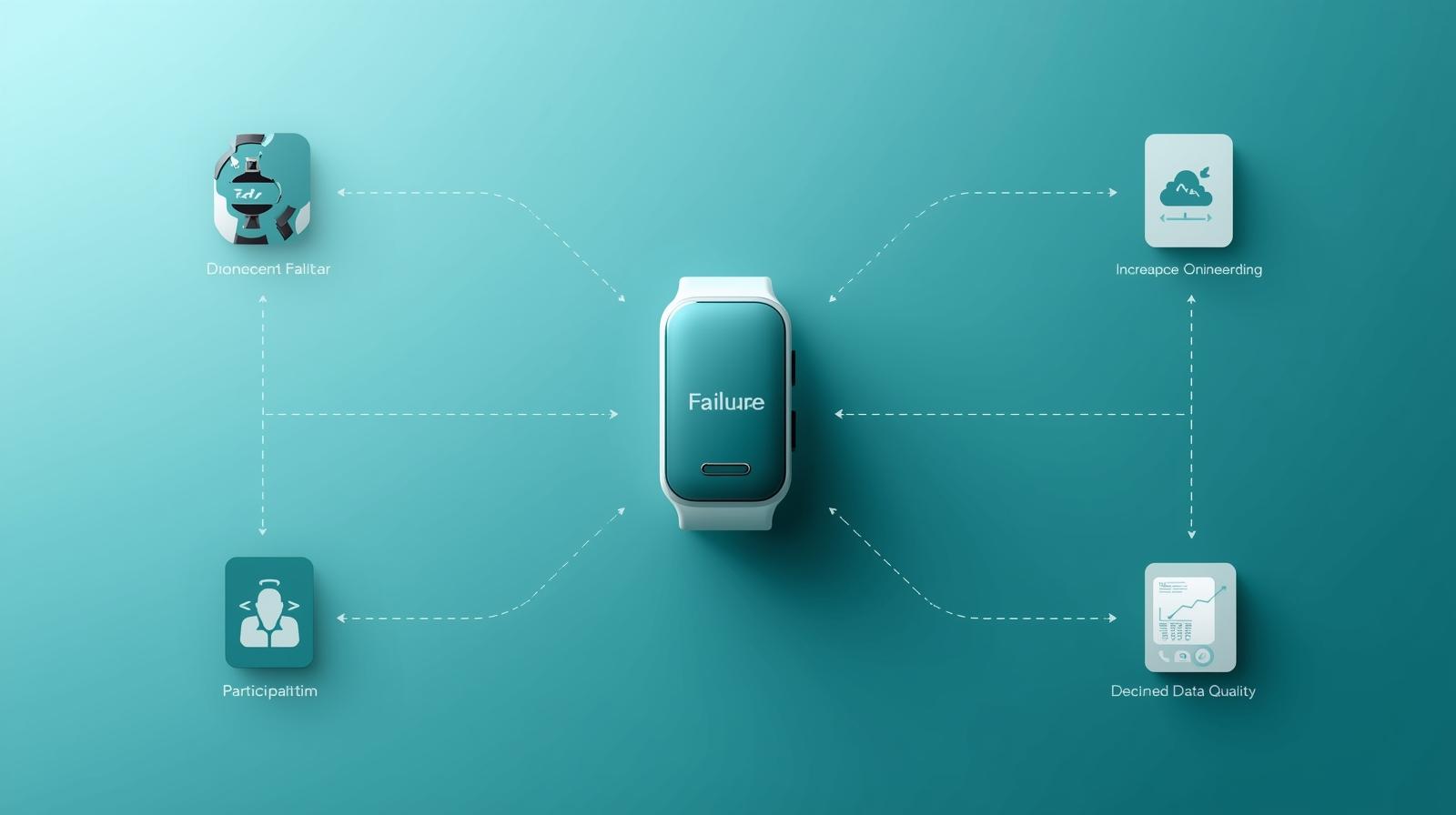
The detail behind the approach, for teams evaluating device integration in depth.
Delve treats integration as a study-execution problem, not just an engineering milestone.
API connection only, reactive issue discovery, fragmented dashboards, site burden for troubleshooting, and late visibility into signal deterioration.
Execution-layer integration, real-time signal and device-health visibility, unified operational oversight, participant recovery workflows, and endpoint-ready data continuity.
Without reliable integration, digital endpoints can’t be operationally trusted. Delve designs integration around endpoint validity, not just data transport. It is one of the core infrastructure layers behind scalable digital endpoint execution.
Integration reflects how the study actually defines valid days, thresholds, and endpoint logic.
The path from raw signal to usable digital measure is visible, monitored, and operationally stable.
Dashboards and endpoint review include context on device state, sync timing, and signal completeness.
Fewer false alarms, less duplicate triage, and less low-quality escalation to sites and sponsors.
When operational signals are visible early, teams recover continuity before missingness becomes endpoint damage.
Reliable integration gives sponsors more confidence in real-world digital measures over long study durations.
It means more than connecting an API. It includes reliable data ingestion, sync monitoring, signal quality control, device-health tracking, endpoint-ready data pipelines, and operational workflows that keep longitudinal data usable throughout the study.
Studies often connect the data source but don’t operationally manage the signal. Common issues include sync breakdowns, battery loss, fragmented vendor systems, delayed issue detection, participant friction, and no defined recovery model.
No. Device integration is one part of endpoint readiness. Endpoint readiness also requires signal QC, fit-for-purpose device selection, usable data pipelines, valid-day logic, operational oversight, and clear workflows for recovery when data continuity drifts.
Data ingestion, device-health visibility, sync and latency monitoring, participant support workflows, signal quality control, analytics readiness, and escalation paths that reduce site burden and protect endpoint integrity.
No. API access is only the starting point. Trials also need sync monitoring, device-health visibility, signal QC, participant support, and operational recovery workflows.
Yes. A strong vendor-agnostic model can support multiple device categories, as long as the study defines clear endpoint logic, operational rules, and visibility across the data pathway.
Because a technically connected device can still fail the study if the signal isn’t monitored, understood, and recovered when drift begins.
Operational guides on keeping device data usable from first sync to database lock.
How to monitor wear time, missingness, and validity before they damage the endpoint.
Read →Why devices silently stop syncing, and how to catch it before data is lost.
Read →The operational gaps that turn small device issues into longitudinal missingness.
Read →Delve combines device integration, signal QC, analytics, and participant support into one operational model designed to protect longitudinal endpoint integrity and reduce study noise.
Book an integration discussion Or explore Delve wearables capabilities