
Device compliance with support
~95%
What proactive, human-backed wear-time support sustains
Key differentiator
Signal quality
Validated data that survives the trip from sensor to dataset
Vendor fragmentation risk
High
When devices, integration, QC, and support are separate vendors
Wearable Platform Evaluation
Device → signal → QC → validated endpoint
What to Actually Evaluate When Comparing Wearable Platforms
Most wearable platform comparisons start with the device list and the integration count. These signal breadth, but they do not predict signal quality, wear-time, or endpoint reliability.
- Signal quality and completeness: what percentage of expected sensor data actually arrives usable, not just transmitted?
- Wear-time compliance model: what happens when a participant stops wearing the device or it goes quiet?
- Validated digital biomarkers: are the measures derived from raw signal validated, and across which specific devices?
- Integration depth, not just breadth: does the platform integrate many devices superficially, or fewer devices with reliable, monitored pipelines?
- Sync reliability and failure detection: how quickly are sync failures caught and resolved before data is lost?
- Device model fit: BYOD, provisioned, cellular, and non-app devices, so the platform fits your study population.
- Long-duration and post-market fit: does signal quality hold across a three-year PMCF program or just a 12-week study?
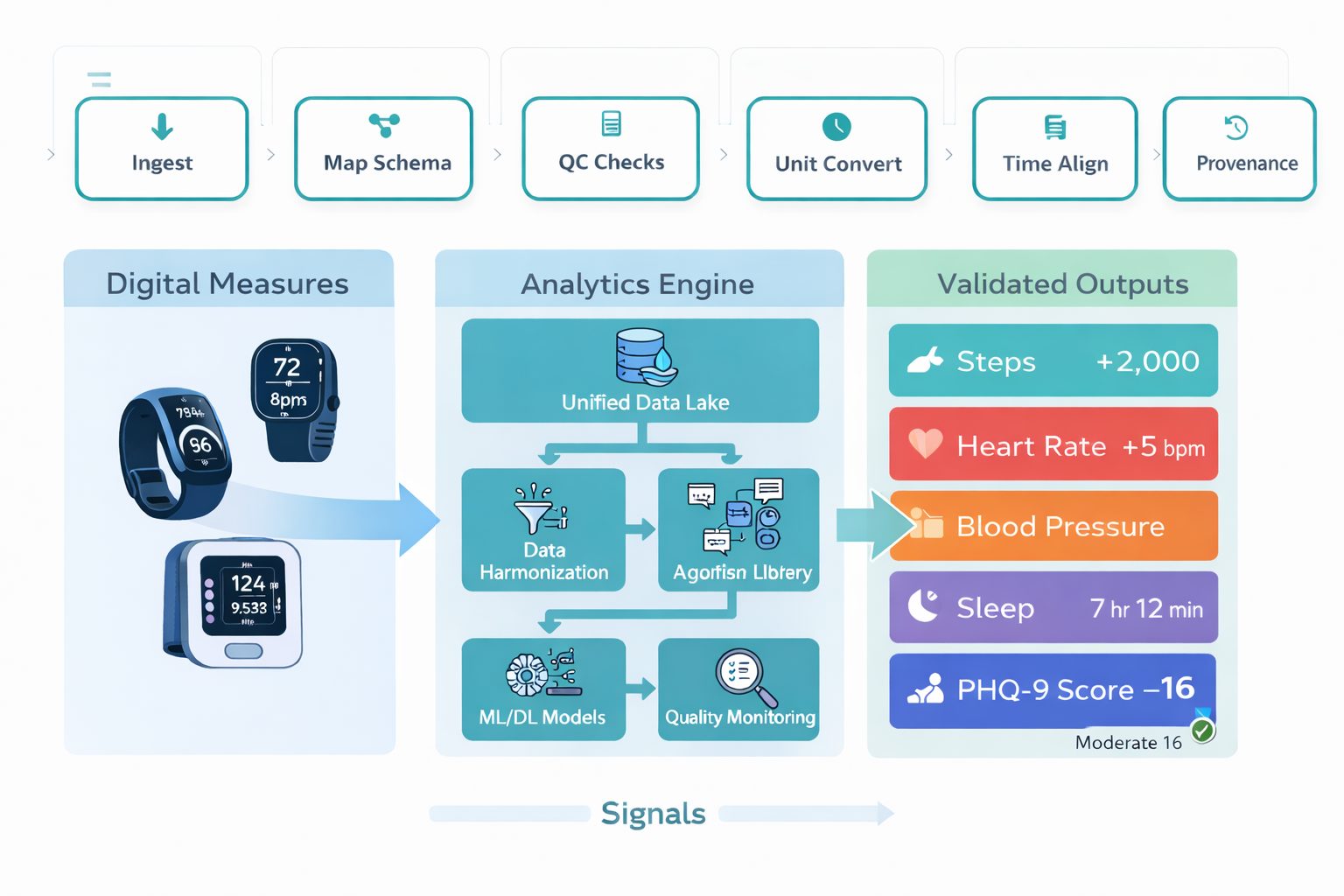
What Most Wearable Platforms Do Not Include
Most wearable platforms provide the integration layer and expect sponsors, CROs, or sites to supply the execution layer. This gap is where signal quality degrades and wear-time quietly decays.
- No proactive outreach when wear-time drops or a device stops transmitting
- No multilingual human support for participants who cannot troubleshoot the device on their own
- No signal quality control layer, so data arrives but no one validates completeness or flags drift
- No validated digital biomarker algorithms, with raw data handed off for someone else to interpret
- Reliance on third-party vendors or middleware to ingest and unify device data
- No device logistics or provisioning, leaving sites to manage hardware and replacements
- No post-market or long-duration model beyond the basic trial window
When these gaps exist, endpoint quality depends on site effort and participant motivation rather than on a designed execution model.

The Case for a Unified Wearable Execution Model
Vendor fragmentation is one of the most common operational risks in wearable-enabled trials. When device integration, signal quality control, biomarker derivation, and patient support are managed by separate vendors, coordination gaps appear at every boundary.
- Sync failures visible in the data pipeline but not acted on by a support team
- Wear-time dropping without a connection to the concierge layer that could re-engage the participant
- Sites expected to manage devices and middleware they were not trained to support
- Raw signal arriving without validated algorithms to turn it into a usable endpoint
Delve Health brings these capabilities together so sponsors have one operating model, one escalation path, and one accountability structure for signal quality, wear-time, and data quality.
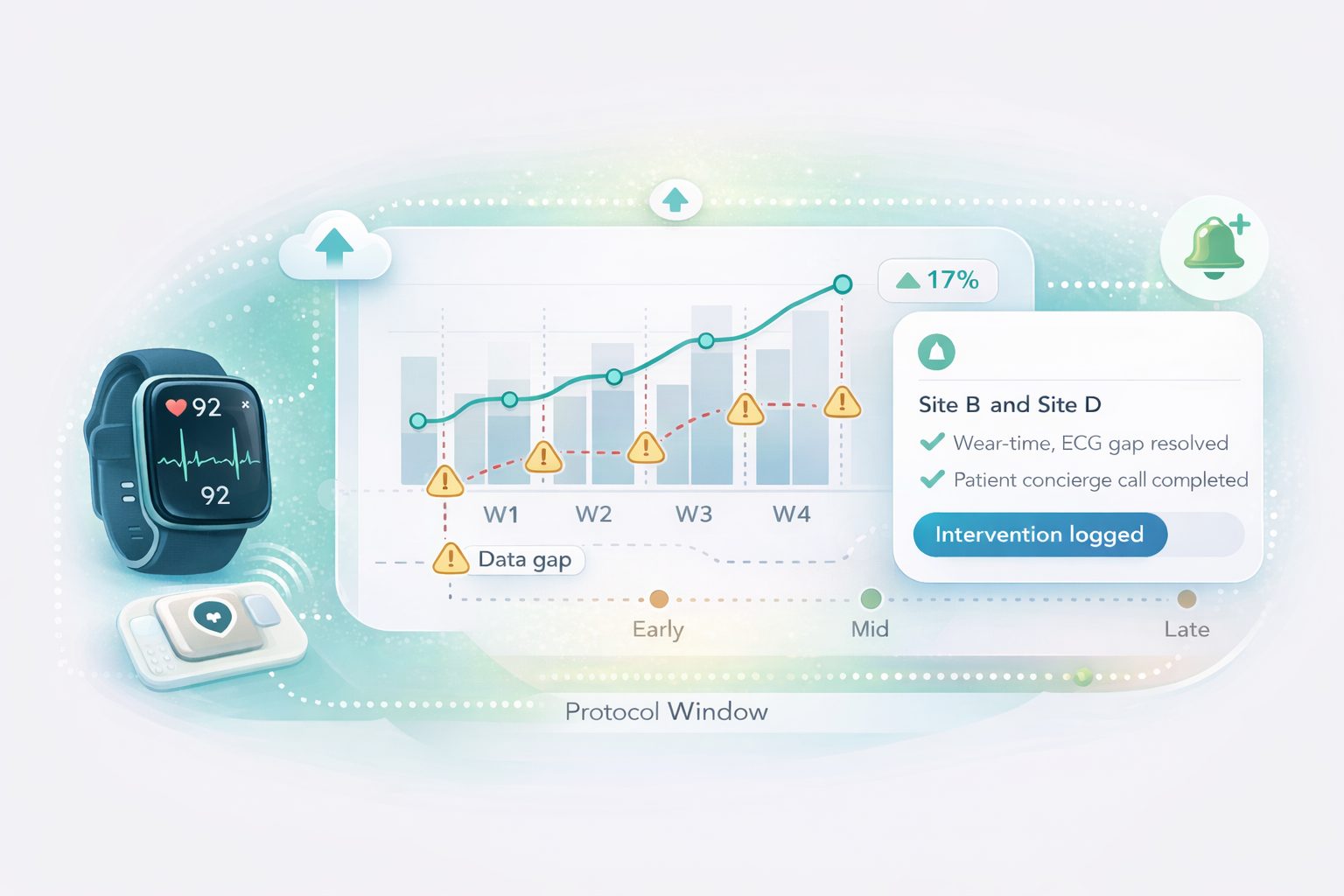
Why Teams Choose Delve for Wearables
Delve is not only a wearable integration layer. It is the execution model that most wearable platforms expect the sponsor or CRO to build themselves.
Validated Digital Biomarkers
Validated algorithms turn raw signal into usable endpoints across many devices, not raw data handed off for someone else to interpret.
Signal Quality Control
An active QC layer validates completeness, flags drift, and catches sync failures before data is lost, instead of discovering gaps at database lock.
Native Device Integration
BYOD, provisioned, cellular, and non-app devices integrated into one pipeline, so data collection does not depend on a participant managing an app.
Concierge for Wear-Time
120+ language support, proactive outreach, and participant recovery built into the wearable workflow so wear-time is managed, not just monitored.
Frequently Asked Questions
What should I look for when comparing wearable platforms for clinical trials?
Beyond the device list and integration count, evaluate signal quality and data completeness, wear-time compliance support, validated digital biomarker algorithms, the device integration model, sync-failure detection, language coverage, and whether the vendor owns wear-time recovery or leaves it to your sites.
Why does the device list matter less than signal quality?
A long device list shows breadth, not endpoint reliability. What protects your endpoint is whether the data arrives complete and usable, whether validated algorithms turn raw signal into a measure, and whether someone recovers wear-time when participants disengage.
What device compliance or wear-time rates should a good wearable platform achieve?
Wearable programs with proactive, human-supported wear-time follow-up typically sustain around 95% device compliance. Platforms without an operating layer often see sync failures go undetected for days before anyone intervenes, with steady wear-time decay in long-duration studies.
Does Delve support cellular or non-app (BYOD) wearable devices?
Yes. Delve integrates BYOD, provisioned, and cellular or non-app devices, so wearable data collection does not depend on a participant installing and managing an app. This widens the population a study can enroll and retain.
What is the difference between integrating a device and delivering a validated endpoint?
Integration moves raw data from a sensor into a system. A validated endpoint is a digital biomarker derived from that signal through a validated algorithm, with quality control confirming the data is complete and usable. Many platforms do the first and hand off the second.

Comparing Delve Against a Specific Platform?
Head-to-head comparison pages help sponsors evaluating two specific platforms side by side:
Medable vs Delve → Castor vs Delve → Clario vs Delve → Signant vs Delve → YPrime vs Delve → See all →
The Best Wearable Platform Is the One That Protects Signal Quality
If you are evaluating wearable platforms, ask each vendor one question: what happens to your endpoint when a participant stops wearing the device? The answer tells you more than any device list.
Compare Delve to Your Current Wearable Platform